Meeting the 3D Scanning Department
At the crossroads of academic and industrial worlds, the 3D Scanning Department was established in January 2026 as a partnership between the Fédération de Recherche Sciences et Cultures du Visuel (FR SCV) and the company Holusion. We met with its two project leaders, Pierre-Henry Bas and Thibault Guillaumont, whose seemingly distant backgrounds converge around a shared ambition: empowering heritage stakeholders to master their 3D data, from acquisition to preservation, including analysis.

Two complementary expertises
Thibault Guillaumont is an engineer. After graduating from Centrale Lille, he co-founded Holusion in 2012, a company specializing in cultural mediation through 3D. "For several years, we have been supporting institutions in their digitization projects. We design custom digital display solutions—such as interactive holograms and transparent screens—for museums and heritage stakeholders," he explains.
Pierre-Henry Bas, on the other hand, is a historian. As a research engineer at FR SCV, he explores material and immaterial culture, from art objects to gestural practices. "I specialize in the study of technical treatises and the written documentation of gestural practices, whether spectacular, artistic, technical, or practical—such as dance, horse riding, martial arts, or fencing. This is what led me to 3D scanning," he clarifies.
A public-private partnership to address a shared need
In 2019, Thibault Guillaumont participated in a project to digitize medieval goldsmith pieces with researchers from the University of Lille and the University of Liège. "We quickly identified a problem: there was no suitable tool for managing libraries of digitized objects, complete with annotations or associated metadata. The question of preserving and enhancing these data then arose."
Pierre-Henry confirms this need: "In the research community, many 3D scanning projects were being carried out in isolation, without a common methodology. It was necessary to structure this approach to ensure the longevity and interoperability of the data."
In 2025, Thibault was working on DoMA, a research project involving the 3D scanning of a former abbey, while Pierre-Henry was leading Get-In-Past, a project focused on the 3D reconstruction and analysis of 18th-century dances. They met at FR SCV, which hosted both projects. Through their exchanges, they decided to create the 3D Scanning Department: Holusion brought its technical expertise and field experience, while FR SCV contributed its academic grounding and long-term vision. "We offer a single entry point for all 3D scanning projects, with a robust methodology and accessible tools," explains Pierre-Henry.
Data sovereignty at the heart of the project
In a context where digital data is often hosted on private platforms, the 3D Scanning Department chooses to guarantee institutions full control over their data. "Thanks to our open-source software, eCorpus, and storage on the public infrastructure of the University of Lille, users retain ownership and control of their data," emphasizes Thibault Guillaumont.
This is a major advantage for museums, local authorities, and researchers: "Your data belongs to you. You decide how to use, share, and enrich it, without depending on an external actor."
The 3D Scanning Department at your service
Whether you are a museum looking to digitize your collections, an architect working on a historic building, or a researcher studying gestural practices, the 3D Scanning Department supports you in:
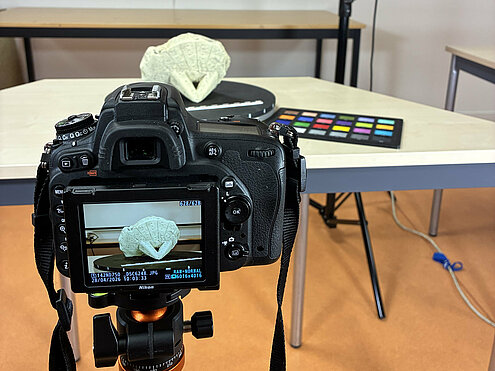
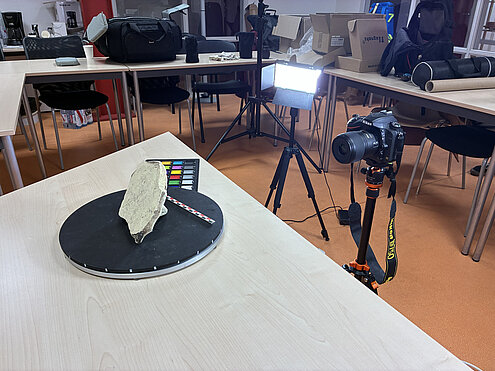
- Conducting scanning campaigns (art objects, historic buildings, scientific instruments, gestural practices).
- Enhancing tangible and intangible heritage through digital tools.
- Creating analyzable and annotatable 3D data to foster collaborative research.
- Training you in 3D scanning methodology.
"Our ambition is to become a reference for the conservation and analysis of heritage, combining technological innovation with a commitment to digital sovereignty," concludes Pierre-Henry Bas.
This initiative demonstrates how collaboration between the public and private sectors can address concrete challenges while placing data valorization and conservation at the forefront.
Do you have a 3D scanning project?
Feel free to contact the 3D Scanning Department!
- Thibault Guillaumont: t.guillaumontholusioncom
- Pierre-Henry Bas: pierre-henry.basuniv-lillefr
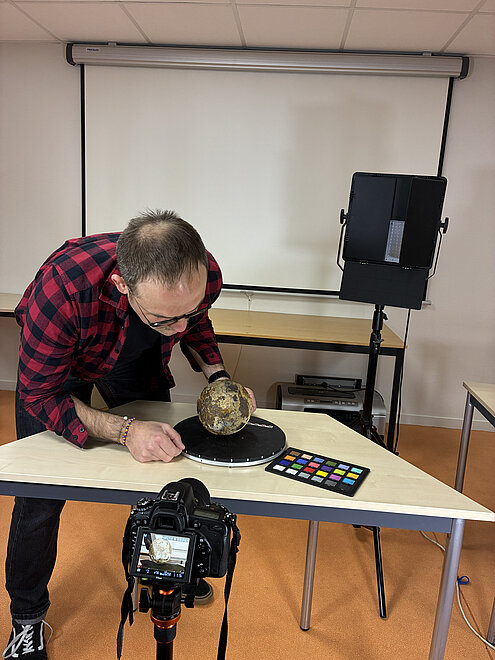
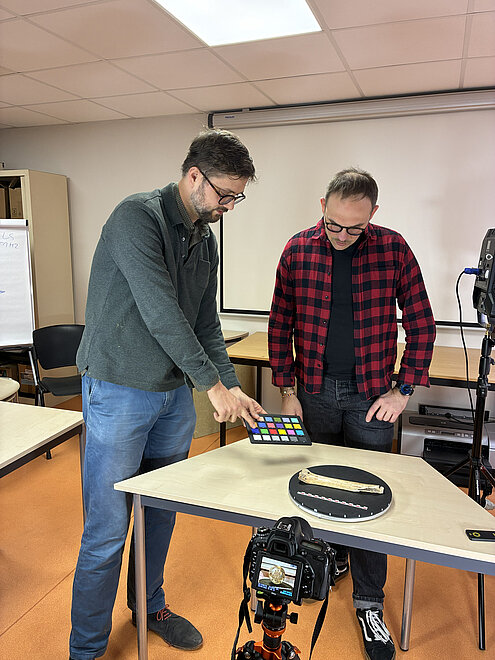
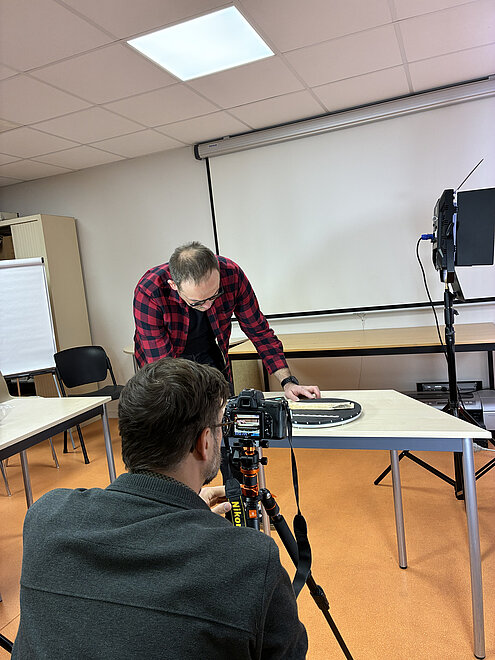
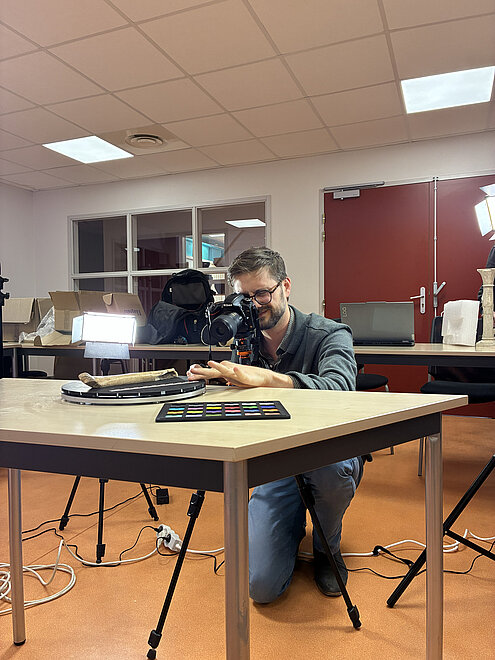
Photos from a 3D scanning campaign for INRAP