
OASIS
Oasis, a collaborative video game to adapt the city to heat
How can we create cool islands in cities and better adapt urban spaces to extreme heat? This question is more relevant than ever as France currently faces numerous heatwaves.The Oasis project, a digital adaptation of the board game L’Échappée fraîche, offers a scientific, educational, and citizen-driven reflection. It helps diverse audiences understand the challenges of urban heat and collectively experiment with adaptation strategies to make cities more livable.
Meet Magalie Franchomme, a geography researcher and lecturer at the University of Lille and member of the TVES laboratory, and Brume Delaunay, a research engineer in urban planning at the University of Lille, also a member of the TVES laboratory.
How did the idea for the game L’Échappée fraîche come about?
The idea for L’Échappée fraîche emerged from research on urban overheating, heat islands, and cities’ adaptation strategies. The goal was to transform complex scientific knowledge into an educational, participatory, and accessible tool. The game was designed as a mediation resource to help people understand—through experience and discussion—the possible urban planning choices for creating cool islands in cities.
The game was developed in 2024 following a request from the Maison pour la Science. It was created as part of the work led by the TVES laboratory, particularly around the CPER ECRIN project.
What is the purpose of the game?
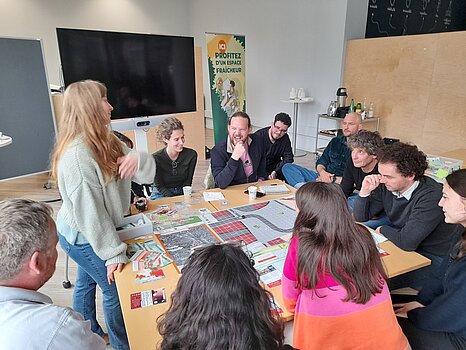
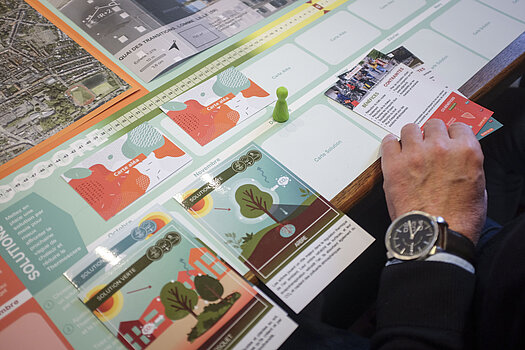
The game aims to raise awareness among participants about urban heat challenges and climate adaptation. It encourages players to collectively brainstorm potential urban planning solutions to prevent urban overheating, such as: vegetation, soil de-sealing, shading, water integration, public space usage. All while considering budgetary or technical constraints. The game also highlights the trade-offs, negotiations, and sometimes tensions that arise in urban planning decisions.
Who is the game intended for?
L’Échappée fraîche has already been used in many workshops, with dozens of sessions organized and hundreds of people engaged. The target audiences are diverse: schools, students, teachers, local authorities, residents, associations, science outreach organizations, and community education groups.
Why create a digital version of the game?
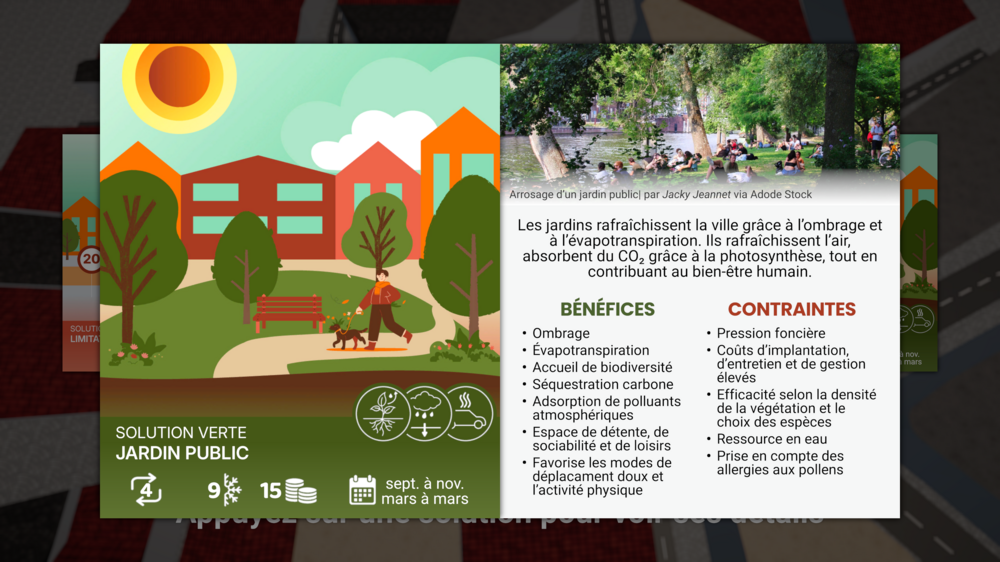
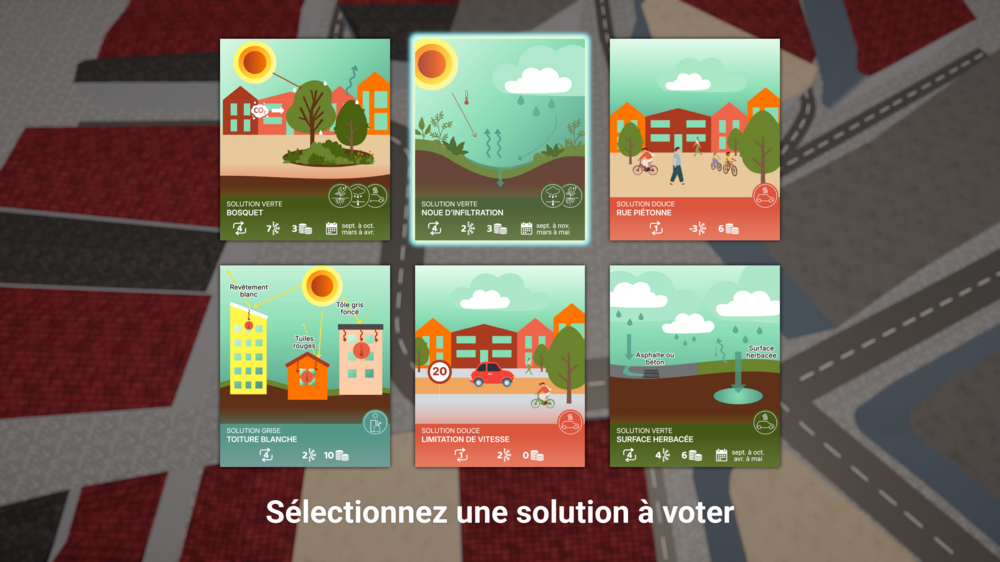
The idea to develop a digital version stems from the desire to expand the game’s reach and explore new forms of learning and mediation. The digital format enhances immersion and allows for better observation of player decisions, negotiation paths, collective strategies, and cooperation dynamics. In this sense, OASIS is not just a digital adaptation of the board game—it is also a tool for experimentation, enabling the study of collective choices and the production of knowledge about learning processes, trade-offs, and behaviors in the face of urban heat adaptation challenges.
What is the current status of the OASIS project, and when will the digital version be available?
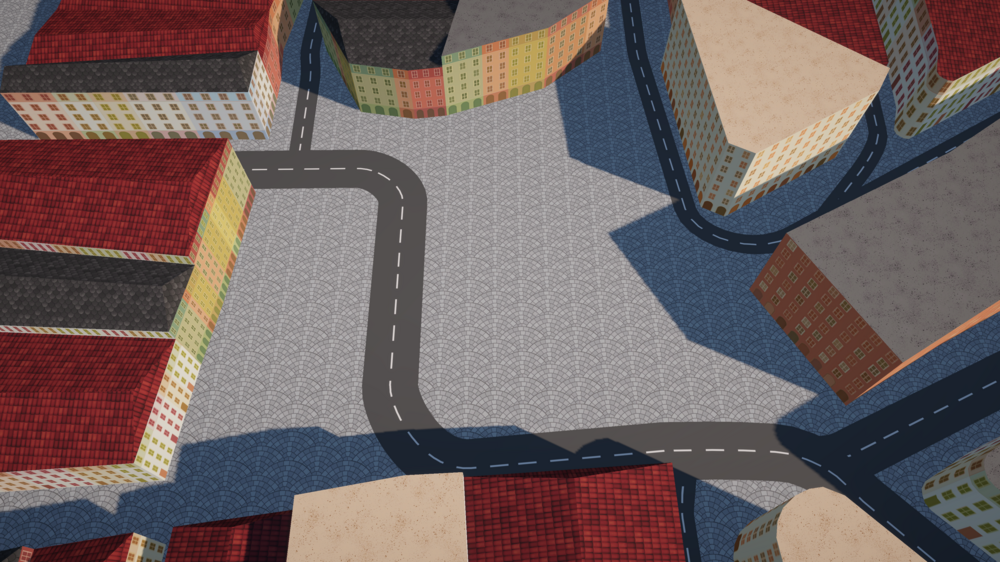
The OASIS project (Observation and Analysis through Immersive Simulation of Heat Adaptation Strategies) is currently in the development and adaptation phase, transitioning the board game into an immersive, collaborative digital version. The goal is to translate the existing game’s mechanics into a digital environment while preserving its educational, collective, and reflective dimensions.
The Research Federation Visual Sciences and Cultures is supporting this adaptation from board game to digital format. It provides expertise in visual, immersive, and interactive systems, as well as guidance on the design, experimentation, and analysis of such digital environments.
A first experimental version is expected to be tested in the coming months.
Discover the other CPER ENHANCE projects
